Rudraksha Beads: Which Mukhi is Right for You
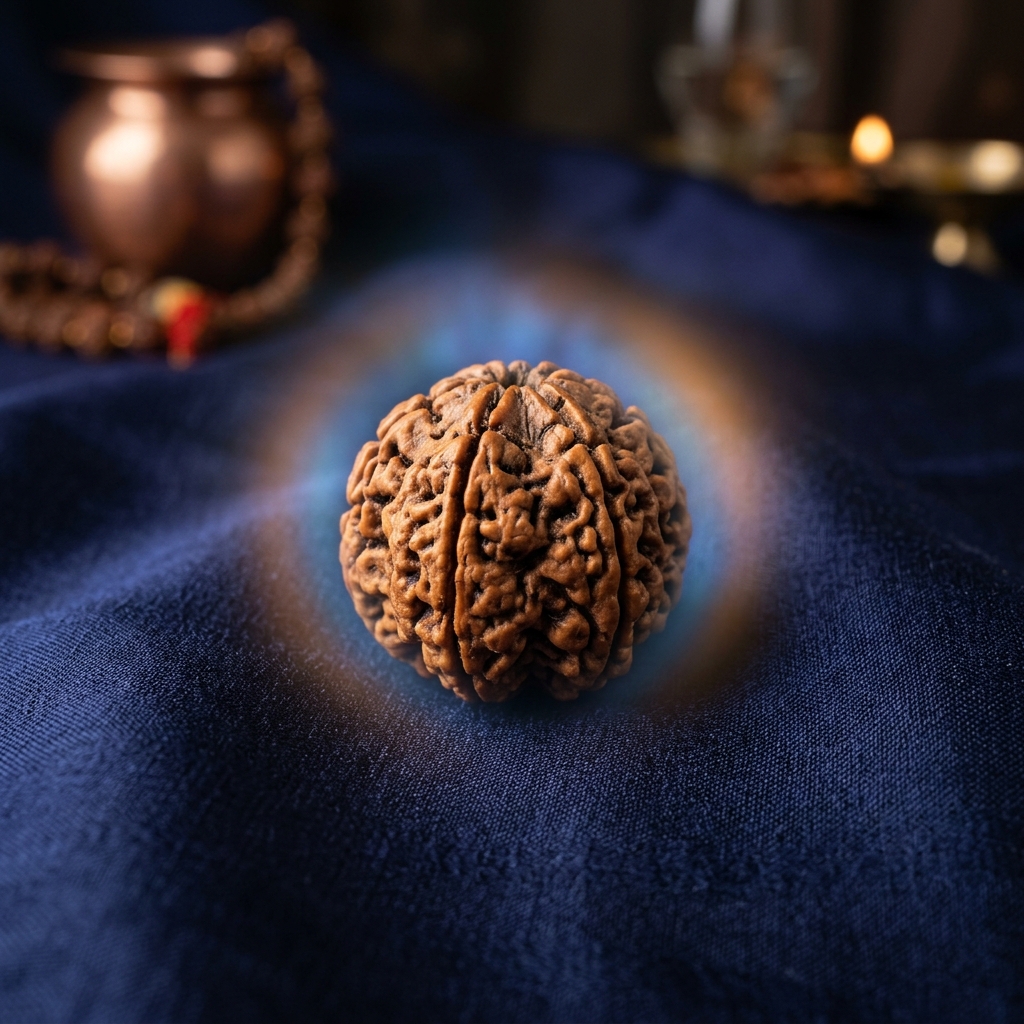
Rudraksha beads are among the oldest known remedial tools in the Shaiva tradition, referenced in the Shiva Purana, the Devi Bhagavatam, and the Srimad Bhagavatam. The name combines two Sanskrit words: Rudra, which is a name of Shiva, and Aksha, meaning eye. Tradition holds that these beads emerged from Shiva's tears, shed not from sorrow but from deep tapas, the concentrated spiritual heat generated by long meditation.
The Rudraksha berry grows from the Elaeocarpus ganitrus tree, found primarily in the Himalayan foothills of Nepal, India, Indonesia, and to a lesser extent in Sri Lanka and Burma. The natural grooves running along the surface of the berry are called mukhi, meaning faces or mouths. A one-mukhi bead has a single groove; a fourteen-mukhi has fourteen. Each face count carries its own mythology, planetary association, and specific benefit.
What makes Rudraksha practically useful rather than merely symbolic? The bead has measurable bioelectric properties. Studies conducted at Banaras Hindu University in the 1990s found that Rudraksha beads exhibit paramagnetic and diamagnetic properties, and that specific mukhi counts affect heart rate and skin resistance when worn. Traditional practitioners had observed this empirically for centuries: certain beads calm the mind, others increase alertness, and others produce a stabilising warmth around the chest. Whether you approach this through physics or tradition, the effects are real and observable.
The Mukhi System: Faces One Through Fourteen
Here is what each mukhi governs, who it helps, and which planet it is associated with in Jyotish:
- 1 Mukhi (Ek Mukhi) Governs: Shiva himself, the Sun. Extremely rare in round form; usually found as a crescent or half-moon shape (half-moon is more commonly available). Suited for people in leadership, those seeking liberation from ego, and individuals with a weak or afflicted Sun. The genuine round one-mukhi is nearly impossible to find at a reasonable price; be very cautious of claimed round one-mukhis sold cheaply.
- 2 Mukhi (Do Mukhi) Governs: the Moon, represents Ardhanarishvara, the unified form of Shiva and Shakti. Good for emotional stability, relationship harmony, and those with Moon afflictions causing anxiety or mood instability. Particularly recommended for couples seeking unity of purpose.
- 3 Mukhi (Teen Mukhi) Governs: Mars and Agni (fire). Useful for people who carry guilt or past trauma, as it is associated with burning karmic residue. Also recommended for those with a debilitated Mars or those prone to anger that turns inward rather than expressing constructively.
- 4 Mukhi (Char Mukhi) Governs: Mercury and Brahma. Enhances speech, intelligence, creative thinking, and learning capacity. Students preparing for examinations, writers, teachers, and anyone whose livelihood depends on communication benefits from this bead.
- 5 Mukhi (Panch Mukhi) Governs: Jupiter and the five elements. The most common Rudraksha and the safest for general use; suitable for almost everyone regardless of birth chart. It regulates blood pressure, supports general health, and brings a calm alertness to the mind. This is the standard bead used in malas and is not contraindicated for any sign or planet combination.
- 6 Mukhi (Chhah Mukhi) Governs: Venus and Kartikeya. Beneficial for willpower, artistic talent, sexual health, and emotional groundedness. Recommended for those with a weak Venus, for artists and musicians, and for people recovering from emotional dependency.
- 7 Mukhi (Saat Mukhi) Governs: Saturn and Mahalakshmi. Associated with financial improvement, business success, and relief from chronic illness connected to Saturn's influence. Particularly helpful during Saturn's Sade Sati period or Mahadasha, and for those in service industries and trade.
- 8 Mukhi (Aath Mukhi) Governs: Rahu and Ganesha. Removes obstacles, particularly the unpredictable and disruptive kind associated with Rahu's influence: sudden reversals, strange accidents, and confusion about direction. Suitable for those in Rahu Mahadasha or Antardasha.
- 9 Mukhi (Nau Mukhi) Governs: Ketu and Durga. For spiritual seekers, people recovering from deep loss, and those whose Ketu creates detachment bordering on nihilism. Builds inner strength and courage while softening Ketu's tendency to cut away what you are attached to without warning.
- 10 Mukhi (Das Mukhi) Governs: Vishnu. A protective bead, particularly against negative energies, black magic, and environmental harm. Not linked to a single planet but works as a general Kavach, a shield. Useful for those working in negative environments or who feel energetically drained by their surroundings.
- 11 Mukhi (Gyarah Mukhi) Governs: the eleven Rudras, Hanuman. Gives courage, correct judgment, and adventure. Recommended for athletes, military personnel, surgeons, and anyone whose work requires rapid, high-stakes decision making. Also strengthens the immune system according to traditional texts.
- 12 Mukhi (Barah Mukhi) Governs: the Sun and the twelve Adityas. Gives confidence, radiance, and leadership capacity. Beneficial for those in public life, politicians, executives, and spiritual teachers. Strengthens the heart and eyes according to Ayurvedic tradition.
- 13 Mukhi (Terah Mukhi) Governs: Venus and Indra. Rare and associated with charisma, attraction, material success, and the fulfilment of desires. Used in tantric practices and by those in creative industries where personal magnetism is central to professional success.
- 14 Mukhi (Chaudah Mukhi) Governs: Saturn and Hanuman. Among the rarest and most powerful, associated with intuition, foresight, and protection from evil. Sometimes called Deva Mani, the divine gem. Useful for those in healing professions, researchers, and spiritual practitioners who need heightened perception.
Nepal vs. Java: Does the Source Matter?
Yes, it matters considerably. Nepali Rudraksha beads are larger, have deeper grooves, and are generally regarded as more potent in the traditional literature. Java Rudraksha from Indonesia is smaller, lighter in colour, and more affordable; it works but is considered less powerful by most practitioners. For a mala worn for general protection and meditation, Java is fine. For a specific remedial purpose tied to a planetary affliction, Nepali is recommended.
Within Nepal, Rudraksha sourced from the Makar Anand region around Badrinath and the lower Mustang area is considered highest quality. These beads have a natural shine and weight, deep unbroken grooves, and a firm seed inside when shaken gently. The surface should not be cracked, the cap should be intact, and the grooves should run cleanly from cap to base without branching irregularly.
How to Identify a Genuine Rudraksha
The copper coin test is widely cited but not reliable on its own: some fake resin beads will also spin between copper coins. More reliable tests include the water test (genuine Rudraksha sinks, though not all fakes float either), the X-ray test showing the internal compartments matching the mukhi count, and most reliably, the visual inspection of groove depth and internal seed. A genuine bead cut open will show a segmented internal cavity with the same number of compartments as mukhi on the surface.
Laboratories like the GIA do not certify Rudraksha, but reputable dealers in Kathmandu and certain Indian laboratories will provide a certificate. When buying a 6-mukhi or higher, especially a 12, 13, or 14-mukhi, always ask for a certificate or purchase from a source with a verifiable returns policy and physical address.
Beware of dyed beads. Natural Rudraksha is brown, often with a reddish tint. Unusually dark or black beads are sometimes soaked in oil or dye to make them look aged. A genuine bead soaked overnight in warm water should release no significant colour into the water.
How to Wear and Energise Your Rudraksha
Before wearing a new Rudraksha, traditional practice is to wash it in raw milk or clean water, then place it in front of a Shiva linga or image and recite the associated mantra 108 times. For a 5-mukhi, the mantra is "Om Namah Shivaya." Each mukhi has its own specific beej mantra: for 1-mukhi it is "Om Hreem Namah," for 2-mukhi "Om Namah," for 3-mukhi "Om Kleem Namah," and so on through the classical texts.
The best days for wearing a new Rudraksha are Monday (for all general Shiva-related beads), the day corresponding to the bead's planetary ruler, or an auspicious day identified from your birth chart. Wear it touching the skin, ideally as a pendant on a copper wire or thread, or as a bracelet. Do not wear it during cremation, menstrual periods according to traditional practice, or sexual activity; remove it before these and replace it afterward.
Oil your Rudraksha periodically with pure sandalwood oil or sesame oil to prevent the bead from drying and cracking. A well-maintained bead lasts for many generations and reportedly increases in potency over time as it becomes associated with the wearer's energy field.
Want to find the right Rudraksha for your situation? The free Rudraksha Finder tool recommends the best Mukhi based on your planetary challenges and goals.
Find Your Rudraksha